
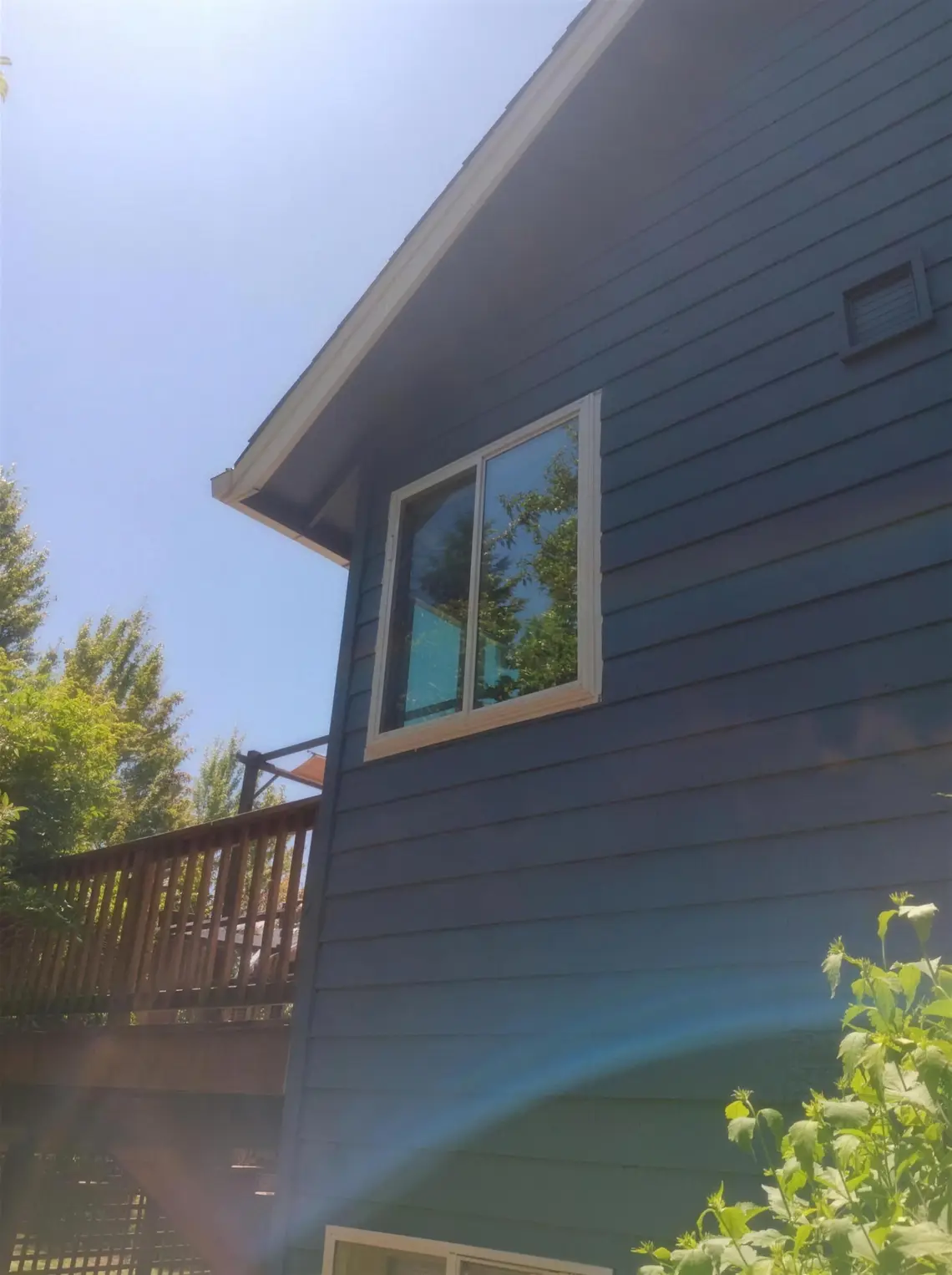
Short answer: Cascade and Milgard are both legitimate Pacific Northwest window manufacturers, and Clearview installs both. Cascade is the standard window on most jobs — solid, vinyl, built in Washington. Milgard is the step up: more product lines, more glass and hardware options, a higher price per opening for the same install labor. Neither is the better brand. They are two price-and-feature points. The right pick depends on the opening and the budget, not brand loyalty.
Where each one comes from
Cascade Windows is a Pacific Northwest manufacturer headquartered in Centralia, Washington. It builds vinyl windows with fusion-welded frames, sold mainly through the regional dealer network Clearview is part of. It is not a big-box brand; it is built for contractors working in this climate.
Milgard is a larger, longer-established West Coast manufacturer with a much wider retail and dealer footprint, and a bigger product lineup spanning entry-level vinyl through fiberglass and aluminum lines. More homeowners already recognize the Milgard name when we come to measure.
Neither company publishes numbers that let you rank them on a single scale. What actually differs is which product tier you are buying within each lineup, and what that tier includes.
Product lines: what each brand name covers
Neither brand is one window — each is a family of lines at different price points, and comparing brand-to-brand only makes sense once you know which tier is on the quote.
Cascade builds around a core vinyl series aimed at the standard-opening, standard-budget replacement — the window most Clearview jobs are quoted with.
Milgard spans a wider range: entry vinyl lines, mid-tier vinyl (its Tuscany and Trinsic-class product), a dedicated fiberglass line, and specialty lines like sound-reduction glass. That’s Milgard’s real edge over Cascade — more tiers to step into when a specific opening calls for it.
If a quote just says “Cascade” or “Milgard” with no line name, ask which one. The gap between an entry vinyl line and a top vinyl line, within either brand, can matter more than the gap between brands.
Glass and U-factor: read the number, not the name
Both brands build insulated glass units with Low-E coatings tuned for a heating climate, and both publish NFRC-rated U-factors and solar heat gain coefficients (SHGC) per product line. Typical whole-unit U-factors for a good double-pane vinyl line from either brand land in the same general range — roughly 0.27 to 0.33 depending on frame style, grid pattern, and gas fill. A top-tier line with better glass can push lower than that; an entry line runs higher.
That range overlaps enough between brands that the brand name alone does not tell you the glass performance. What tells you is the U-factor and SHGC on the NFRC label for the specific window being quoted, and we will show you that label before you sign.
Warranty: both are lifetime, read the fine print anyway
Cascade backs its residential vinyl product with a lifetime limited warranty for the original owner, with separate terms for commercial work. Milgard backs its vinyl lines with a full lifetime warranty for the original owner that steps down to a limited term — commonly ten years — for a subsequent owner.
“Lifetime” means the life of the original owner, not literally forever. Both documents carve out specific coverage for glass, hardware, and labor — neither blanket-covers everything. Selling within the warranty period? The transfer terms matter more than the headline word “lifetime.” Ask to see the actual document for the line you’re buying, not a summary.
That manufacturer warranty is separate from Clearview’s install warranty — the glass and hardware are the factory’s promise; the flashing, sealing, and fit are ours.
What it costs
On Clearview’s own pricing, Cascade is the baseline window — no added charge over the base installed price for a standard vinyl opening. Milgard adds roughly $100 per window opening on top of that same install, for the upgraded product. That gap is per window, not per house — it does not apply to doors, since the brand choice here is a window-line decision, not a door one. See what a Washington project costs for how that fits into a full quote.
How to decide
- Standard opening, standard budget, no special requirement: Cascade is the reasonable default, and it’s what most Clearview jobs run.
- Street-facing elevation where color, grid, or hardware options matter more: Milgard’s wider line-up gives you more to choose from.
- A specific U-factor or SHGC target, maybe for a rebate program: ask for the NFRC number on the exact line quoted, from either brand, rather than assuming the pricier brand automatically clears the bar.
- Budget is the constraint and the opening is unremarkable: Cascade does the job without the upcharge.
None of this is a general brand recommendation. It is a set of questions to ask before the quote is written, whichever brand ends up on it.
Common questions
Does Clearview install other brands besides these two?
Cascade and Milgard cover the range we order for most jobs. If a project needs something outside that — a specific historic-district requirement, for example — we will say so at the measure rather than force-fit one of these two.
Is Milgard actually a better window, or just a pricier one?
Milgard's step-up lines add options — better glass packages, more hardware and color choices, sometimes tighter U-factors — that Cascade's lineup doesn't offer at every tier. Whether that's worth the money depends on the opening and what you want from it, not a blanket "better."
Do Cascade and Milgard use the same glass?
No. Each brand specs its own glass package and Low-E coating, and the numbers differ by product line within each brand too. Ask for the U-factor and SHGC on the specific unit quoted, not the brand name alone.
Which brand has the better warranty?
Both are lifetime warranties on vinyl residential product for the original owner, transferring to a limited term for a later owner. Read the actual document for the line you're buying — the fine print on transferability and labor coverage is where warranties actually differ.
Can I mix brands on one house?
It happens less often than mixing different amounts of work across a house, but yes — a homeowner upgrading a few street-facing openings to Milgard while the rest of the house takes Cascade is a normal way to control budget.
Does the brand change how the window is installed?
No. The flashing and sealing standard stays the same either way. The brand changes what's in the opening, not how we set it.